6 inch caster wheels: the size the warehouse runs on.
Six inches is where caster physics turns friendly: big enough to roll over floor joints and debris without drama, small enough to keep equipment stable and affordable. This page covers our 6 inch caster wheels across materials and configurations.
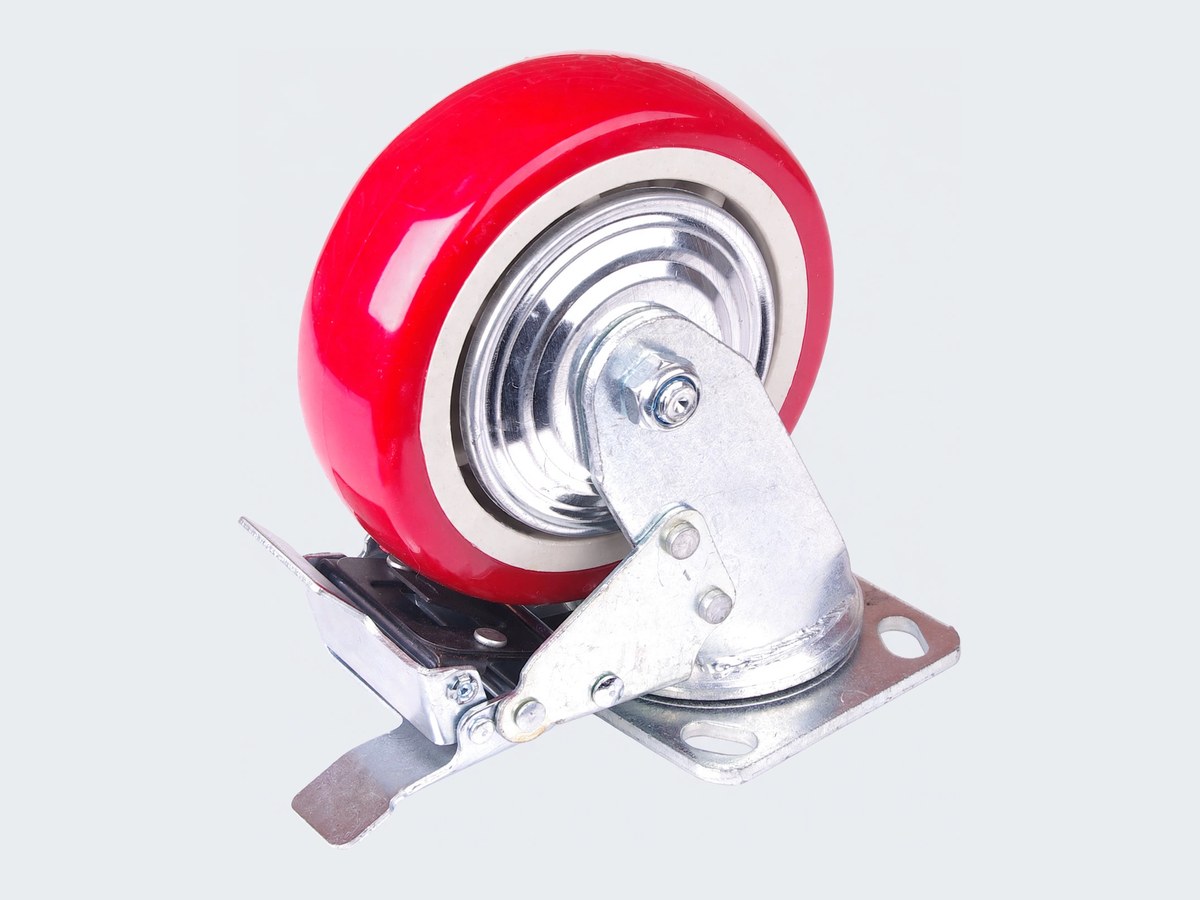
Wheel diameter is the single strongest lever on rolling performance. Double the diameter and you roughly halve the effort of rolling over an obstacle of a given height, because the wheel meets the obstacle at a shallower angle. That is why 6 inch caster wheels became the default for warehouse carts, platform trucks, roll cages and production dollies: the size where one person can move a serious load across a real floor — expansion joints, dock plates, pallet debris and all — without the equipment growing top-heavy.
The 6 inch range here
| Configuration | Wheel | Go to |
|---|---|---|
| 6 in heavy duty PU rigid | PU on cast iron, 150 x 50 mm | Straight-tracking pairs on carts and trucks |
| 6 in heavy duty PU swivel | PU on cast iron, 150 x 50 mm | Steering ends and all-swivel equipment |
| Braked swivel variants | PU on cast iron | Equipment that parks on slopes or docks |
The 150 x 50 mm wheel size matters beyond performance: at over 75 mm diameter and 50 mm width, this size sits outside the HTS 8302.20 castor definition and classifies under 8716.90.30 for US import — a classification fact your broker will thank you for knowing in advance, detailed in our tariff guide.
When 6 inch is the wrong size
- Low equipment: overall height grows with wheel size; low-clearance equipment may belong on the 4 inch heavy duty configuration instead.
- Very heavy loads: beyond this size class, the 8 inch extra heavy duty wheel carries more with less rolling resistance.
- Rough yards: cracked concrete and outdoor debris argue for larger diameters or the rubber line's shock absorption.
- Tight turning: swivel lead and turning radius grow with diameter; compact equipment sometimes steers better on smaller wheels.
Tell us the equipment, its loaded weight and the floor it crosses, and we will confirm whether 6 inch is your size or talk you out of it — the measurement guide covers how diameter and overall height are measured if you are replacing an existing wheel.
The specification we lock before quoting
A quotation is only comparable when the specification underneath it is fixed. For this line — as for every CASTOVELLA line — the written quotation locks these six variables, and the production sample is checked against them before bulk production is approved:
- Wheel diameter and width — width is both a performance variable and the US tariff classification variable; it is measured on the sample, not copied from a catalogue.
- Tread material and hardness — stated as a Shore hardness range, so the bulk shipment can be checked against the approved sample.
- Bearing type — plain, roller or precision ball bearing, named on the quotation; bearing swaps are the most common silent downgrade in this industry.
- Fork and top plate thickness — measured in millimetres and stated, because fork flex is where cheap heavy duty casters fail first.
- Load capacity and test method — capacity per caster with the test convention named (EN 12532 / ANSI ICWM), never a bare number.
- Finish and hardware — zinc plating, stainless grade or coating stated per component, not per marketing photo.
Buyer questions
What load can a 6 inch caster wheel carry?
Capacity depends on the full configuration — tread, core, bearing, fork — not diameter alone. The heavy duty 6 inch configurations are quoted with per-caster capacity and its test convention stated; send your equipment weight for a matched recommendation.
Is a wider wheel better?
Width spreads load and protects floors, and adds rolling stability; it also adds weight and cost and changes the tariff classification arithmetic. 50 mm is this size's standard heavy duty width for a reason — it is the balanced point for warehouse duty.
Can 6 inch casters replace 5 inch or 8 inch on existing equipment?
Only if overall height and mounting pattern still work: a bigger wheel raises the equipment and may foul guards or frames. Measure the existing overall height and plate pattern first — the measurement guide shows how.
Swivel or rigid for platform trucks?
Two rigid on one end, two swivel on the other is the platform truck standard: tracks straight under push, steers from the swivel end. All-swivel suits roll cages that must spin in place in lifts and aisles.
Price this line against a locked specification.
Send diameter, width, load per caster, quantity and destination port. The reply states the full specification the quotation is built on.