Plate casters: four bolts between the load and the floor.
The top plate is the strongest, most forgiving mounting a caster can have — which is why it carries the heavy duty world. This line covers swivel and rigid plate casters across the range, with plate size and bolt hole pattern stated as dimensions, not descriptions.
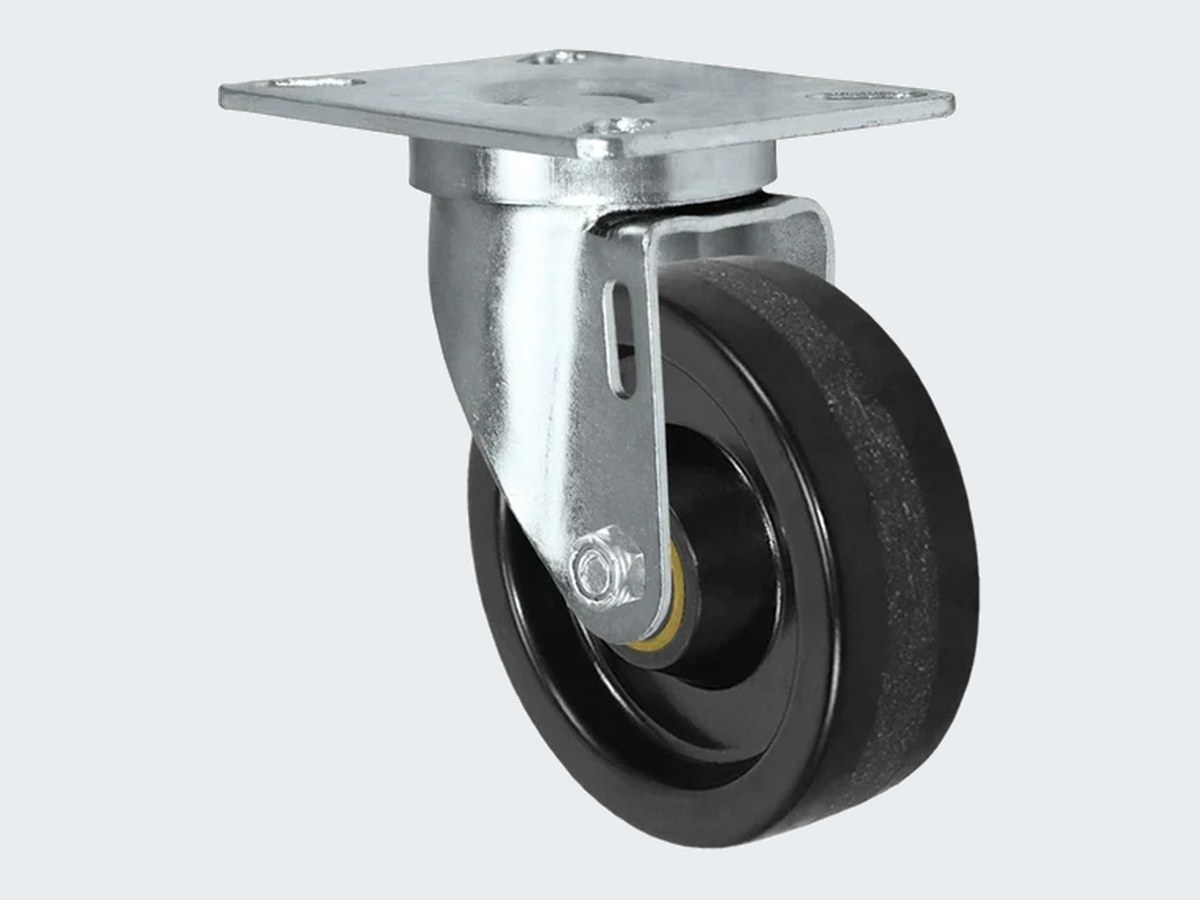
A plate caster bolts through a flat plate into the equipment frame, spreading load across four fasteners and a stiff flange. It is the mounting of choice wherever loads are heavy, floors are rough, or the equipment will be dragged, pushed and occasionally abused for a decade. Every CASTOVELLA heavy duty, stainless and leveling configuration is available on a top plate, and the plate itself is part of the locked specification: overall size, bolt hole spacing, and plate thickness.
Why plate dimensions belong on the quotation
Bolt hole patterns are the quiet compatibility layer of the caster industry. Equipment frames are drilled for a pattern; a replacement or OEM caster that misses the pattern by 3 mm is scrap. Our quotations state the plate size and the hole spacing (for example, the spacing in both axes and the bolt diameter the holes accept), so your engineering team can check the interface against the frame drawing before a sample ships — and so reorders fit the frames you already build.
Swivel and rigid on one plate standard
The working layout on most equipment is two swivel and two rigid casters sharing one plate standard, so a single drilling pattern serves the whole machine. Swivel plates carry the raceway specification (single or double ball race, hardened or not); rigid plates are simpler but share the same thickness discipline. The swivel vs rigid guide covers layout ratios for different equipment shapes.
Where plates beat stems
- Load: four-bolt load spreading vs a single stem's concentrated load path.
- Side loads: plates tolerate dragging and side impact that bends stems.
- Service: a plated caster unbolts and swaps in minutes with hand tools.
- Retrofits: an undrilled frame accepts a plate anywhere; a stem needs the right socket to exist first.
Browse the lines that mount on plates by default: heavy duty, stainless steel and leveling casters — or send your frame's hole pattern in the RFQ and we will match the plate to it.
The specification we lock before quoting
A quotation is only comparable when the specification underneath it is fixed. For this line — as for every CASTOVELLA line — the written quotation locks these six variables, and the production sample is checked against them before bulk production is approved:
- Wheel diameter and width — width is both a performance variable and the US tariff classification variable; it is measured on the sample, not copied from a catalogue.
- Tread material and hardness — stated as a Shore hardness range, so the bulk shipment can be checked against the approved sample.
- Bearing type — plain, roller or precision ball bearing, named on the quotation; bearing swaps are the most common silent downgrade in this industry.
- Fork and top plate thickness — measured in millimetres and stated, because fork flex is where cheap heavy duty casters fail first.
- Load capacity and test method — capacity per caster with the test convention named (EN 12532 / ANSI ICWM), never a bare number.
- Finish and hardware — zinc plating, stainless grade or coating stated per component, not per marketing photo.
Buyer questions
What plate information do you need from me?
Overall plate size, bolt hole spacing in both axes, and bolt diameter — or the frame drawing. If you are matching an existing caster, the measurements in our measurement guide cover plates.
Are plate sizes standardised?
There are common industry patterns, but 'common' is not 'universal' — patterns differ between size classes and regions. That is why the pattern is a stated dimension on our quotations rather than an assumed standard.
Can one plate standard serve swivel and rigid?
Yes, and it usually should: one drilling pattern across the machine simplifies both production and spares. Tell us that is the goal and the quotation is built around it.
What plate thickness do heavy duty casters need?
Thickness scales with the load class and is stated in millimetres on the quotation. Undersized plates flex, work their bolts loose and crack at the holes — a failure mode we specify against rather than warranty against.
Price this line against a locked specification.
Send diameter, width, load per caster, quantity and destination port. The reply states the full specification the quotation is built on.