Stem casters: the interface is the product.
A stem caster succeeds or fails at one dimensioned interface. This line covers threaded stem, grip ring stem and bolt-hole casters across furniture, institutional and light industrial duty — with stem diameter, length and thread locked on every quotation.
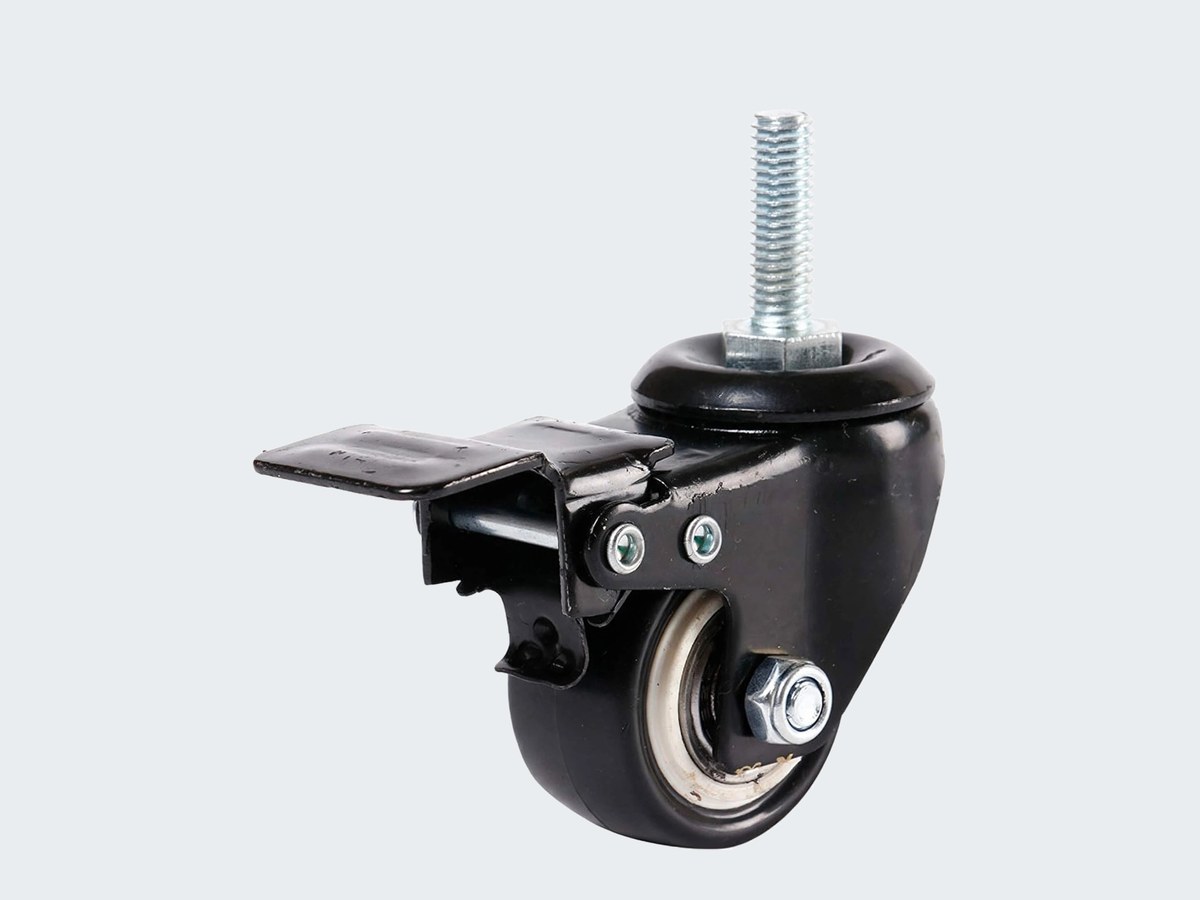
Plate casters forgive; stem casters do not. A plate that is 2 mm off can be re-drilled. A stem that is 1 mm oversize will not enter the socket, a thread that is the wrong pitch will cross-thread and destroy the insert, and a grip ring stem in the wrong socket standard will walk out under load. That is why stem casters are specified interface-first at CASTOVELLA: the wheel and fork are the easy half of the quotation.
The three stem families
| Stem type | How it fits | Common on |
|---|---|---|
| Threaded stem | Screws into a threaded insert or tapped frame | Equipment stands, medical and lab carts, adjustable furniture |
| Grip ring stem | Friction ring snaps into a socket | Office furniture, retail fixtures, light carts |
| Bolt hole (hollow kingpin) | A bolt passes through the swivel head into the frame | Tube frames, wire shelving, utility carts |
What we need from you
- Stem diameter and length — measured, or matched from your sample.
- Thread specification — for threaded stems: diameter, pitch, and whether the mating part is an insert, a nut or a tapped frame.
- Socket standard — for grip ring stems: the socket the stem must snap into; standards differ between furniture systems and are not interchangeable.
- Load direction quirks — stems see side loads that plates do not; tell us if the application drags casters sideways (racks pulled from the side, for example).
If you cannot measure the interface, send a sample of the caster or the socket with your inquiry — matching a physical interface beats three rounds of dimensioned email. Samples sent to us are measured and the dimensions recorded on the quotation, so reorders match without a new sample.
Which lines use stems
Stems anchor the furniture line, the institutional end of the rubber and TPR line (medical and cart duty), scaffold casters in their stem variant, and shopping cart casters with their own fitting conventions. If your product is a cart, rack or stand with sockets or inserts, this is your mounting family.
The specification we lock before quoting
A quotation is only comparable when the specification underneath it is fixed. For this line — as for every CASTOVELLA line — the written quotation locks these six variables, and the production sample is checked against them before bulk production is approved:
- Wheel diameter and width — width is both a performance variable and the US tariff classification variable; it is measured on the sample, not copied from a catalogue.
- Tread material and hardness — stated as a Shore hardness range, so the bulk shipment can be checked against the approved sample.
- Bearing type — plain, roller or precision ball bearing, named on the quotation; bearing swaps are the most common silent downgrade in this industry.
- Fork and top plate thickness — measured in millimetres and stated, because fork flex is where cheap heavy duty casters fail first.
- Load capacity and test method — capacity per caster with the test convention named (EN 12532 / ANSI ICWM), never a bare number.
- Finish and hardware — zinc plating, stainless grade or coating stated per component, not per marketing photo.
Buyer questions
How do I measure a threaded stem correctly?
Measure the outside diameter across the threads, the usable thread length, and determine the pitch with a thread gauge (or count threads over a known length). Our measurement guide shows the method for stems, wheels and plates.
Are metric and inch stems interchangeable?
No. A metric stem in an inch socket (or the reverse) may feel close and still be wrong — it will loosen or seize. State the standard your furniture or equipment uses and we will supply to it.
Can stem casters carry heavy duty loads?
Stems concentrate load differently from plates. Light and medium duty is the stem's home; for heavy duty, a top plate spreads load into the frame properly. We will say so if your RFQ pairs a heavy load with a light stem.
Do you supply the sockets as well?
Socket and insert supply can be included in an OEM programme so the interface is controlled from both sides — ask in the RFQ.
Price this line against a locked specification.
Send diameter, width, load per caster, quantity and destination port. The reply states the full specification the quotation is built on.